James Fuentes Gallery
Alison Knowles
The Boat Book
For her second exhibition with James Fuentes, Fluxus artist Alison Knowles will present the most recent addition to her oversized book project, which debuted at Something Else Gallery in New York with The Big Book, 1966. These books are built as installations organized around a spine, a fully immersive reading experience. From 1966 through 1969, The Big Book traveled to venues in Canada, Europe and the United States. A seminal work within Knowles’s career, its influence led her to further investigations of the format with The Book of Bean, 1981 and a more intimately tactile work, The Finger Book of Ancient Language, 1982.
With The Boat Book, 2014-2015—which debuted at Art Basel Miami Beach—Knowles continues this investigation in a sculptural work whose structure is comprised of eight wood-framed pages, each four feet wide by eight feet high, on a central axis. Casters are attached to the bottom edge of each page, allowing them to turn. Each page presents an opportunity to literally go through it - whether by window, hole or tunnel - to the following page, creating a sequence of environments within the confines of the book. Like the experience of reading a traditional, hand-held book, the viewer/engager/reader of The Boat Book is completely absorbed in the exploration. Culling from sources as varied as a barn on the coast of Long Island, an old ship yard, the beaches of Lake Michigan and the New York Public Library Photo Collection, the nautical references and materials of The Boat Book render an ode to the artist’s older brother, Lawrence Beckwith Knowles, a fisherman working on the fishing vessels in East Hampton since the 1950’s. True to the concept of intermedia, which was developed by Knowles’ late husband, the Fluxus artist Dick Higgins, The Boat Book is not a work that can be easily categorized. It is interdisciplinary in nature, embodying a juncture between sculpture, installation, sound work, performance, and of course, the book format. Inclusion of elements such as photography, collage, assemblage, silkscreen, inkjet print, handmade paper, beans, and personal ephemera, further expand the breadth of the work, tackling notions of the literary, the visual and self-reflexivity.
Works
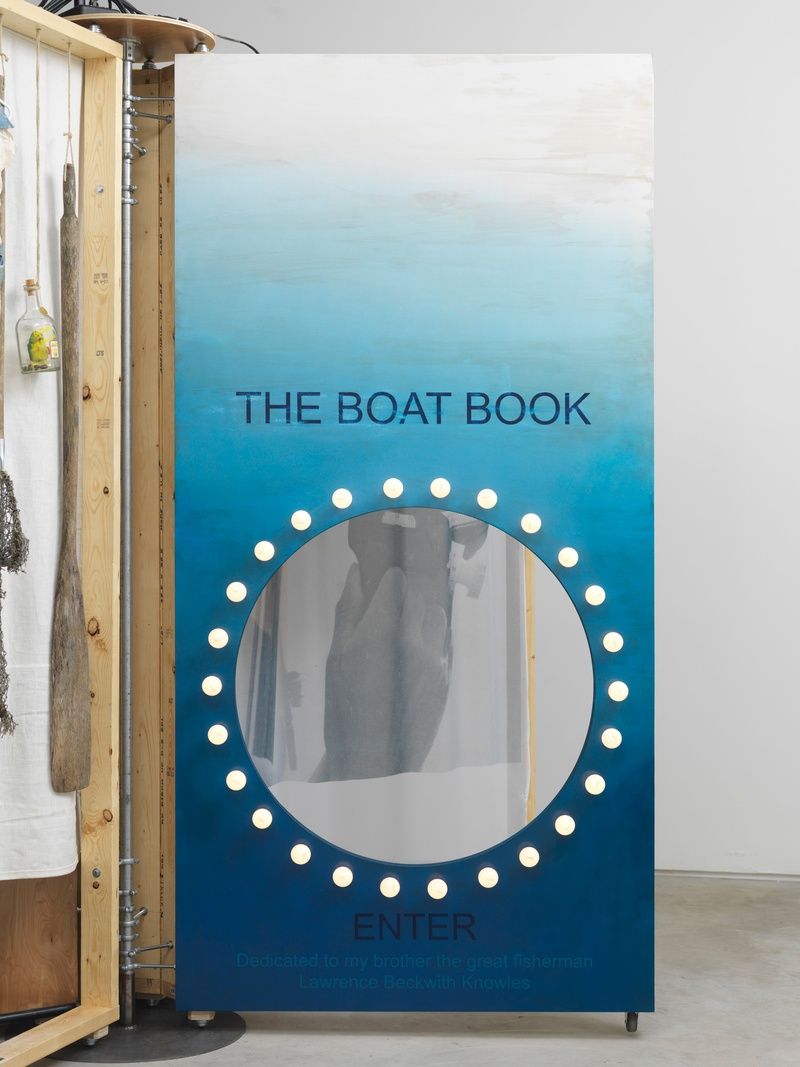
The Boat Book, 2014-2015,
Mixed media (includes wood and metal frame with silkscreen, digital print on silk, handmade paper, collage, assemblage, personal ephemera, beans, books, fishing net, photography, ship anchor, fabric tunnel, electrical lights and spoken word audio)
Dimensions variable, approx: 96 × 106 inches
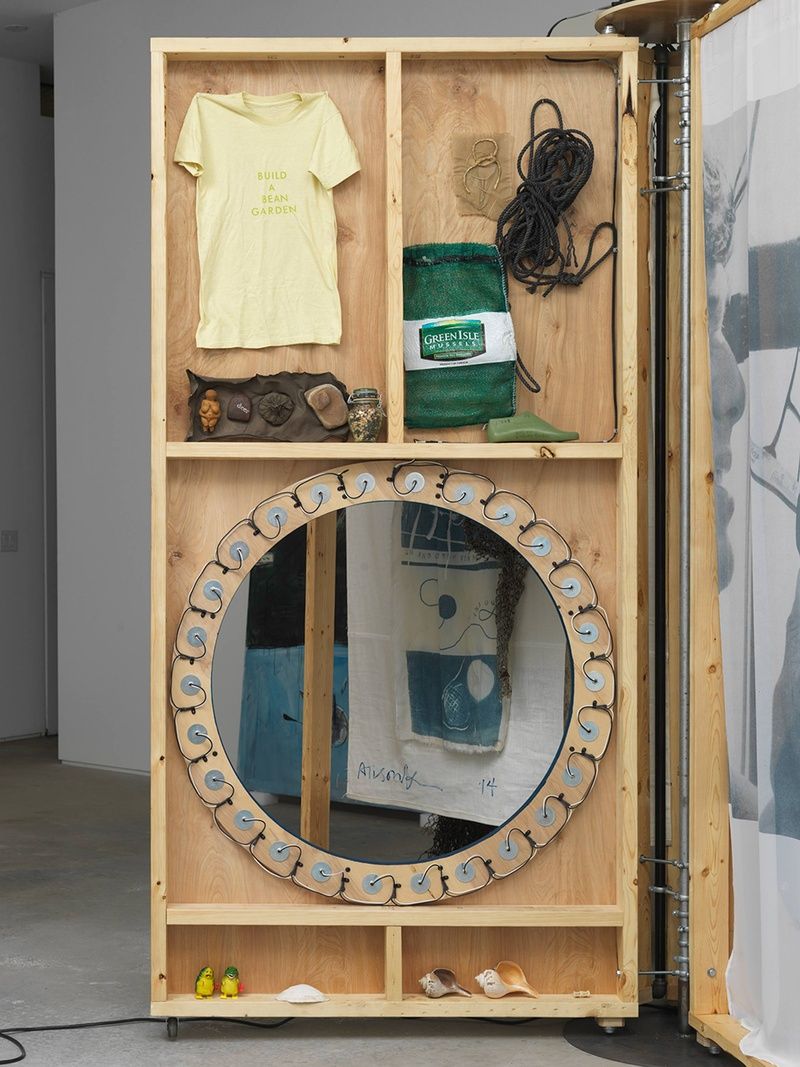
The Boat Book, 2014-2015,
Mixed media (includes wood and metal frame with silkscreen, digital print on silk, handmade paper, collage, assemblage, personal ephemera, beans, books, fishing net, photography, ship anchor, fabric tunnel, electrical lights and spoken word audio)
Dimensions variable, approx: 96 × 106 inches
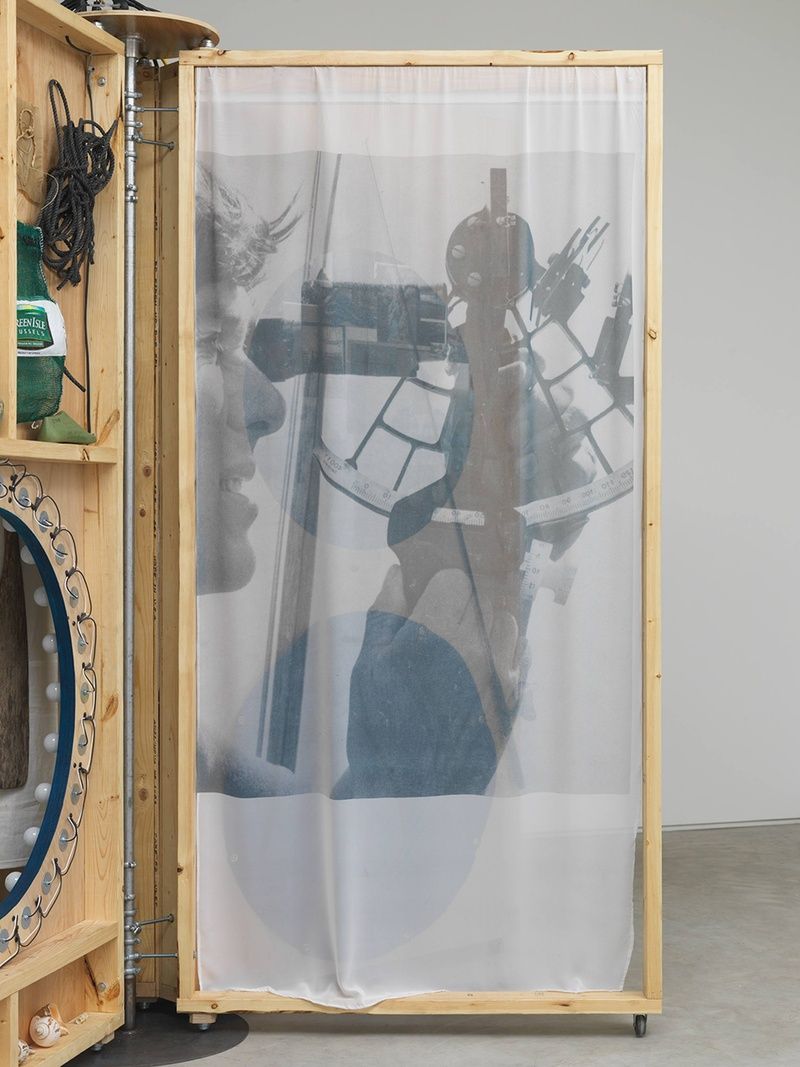
The Boat Book, 2014-2015,
Mixed media (includes wood and metal frame with silkscreen, digital print on silk, handmade paper, collage, assemblage, personal ephemera, beans, books, fishing net, photography, ship anchor, fabric tunnel, electrical lights and spoken word audio)
Dimensions variable, approx: 96 × 106 inches
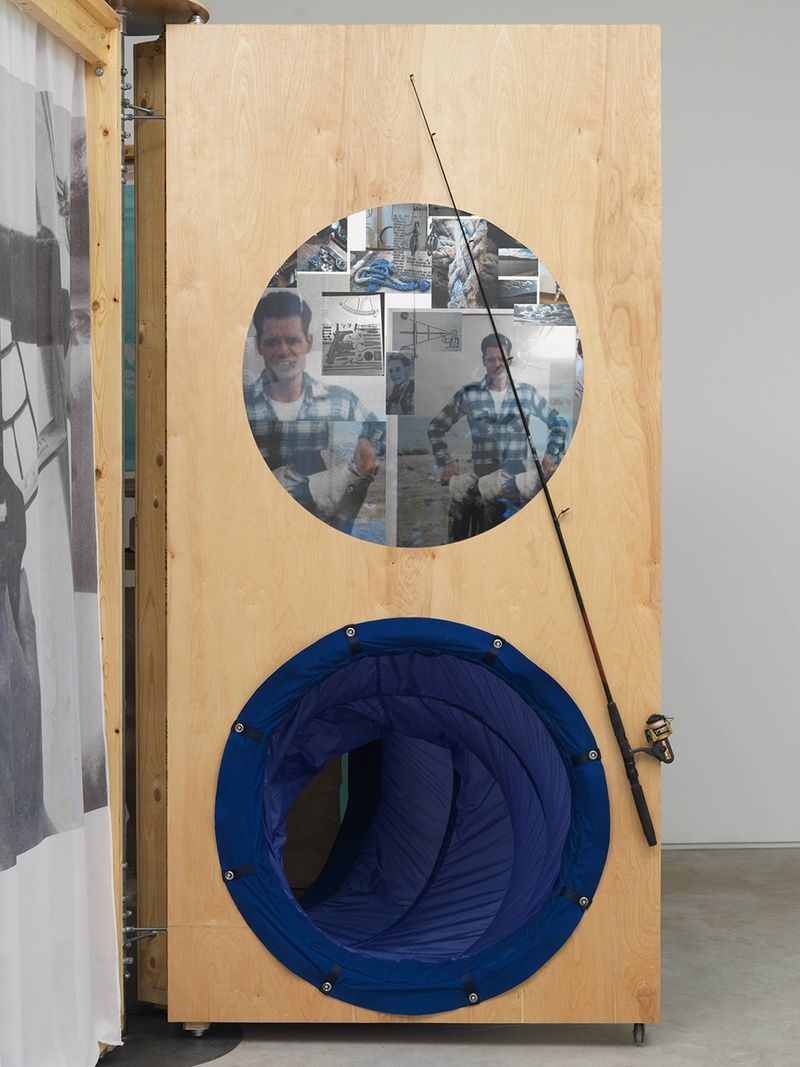
The Boat Book, 2014-2015,
Mixed media (includes wood and metal frame with silkscreen, digital print on silk, handmade paper, collage, assemblage, personal ephemera, beans, books, fishing net, photography, ship anchor, fabric tunnel, electrical lights and spoken word audio)
Dimensions variable, approx: 96 × 106 inches