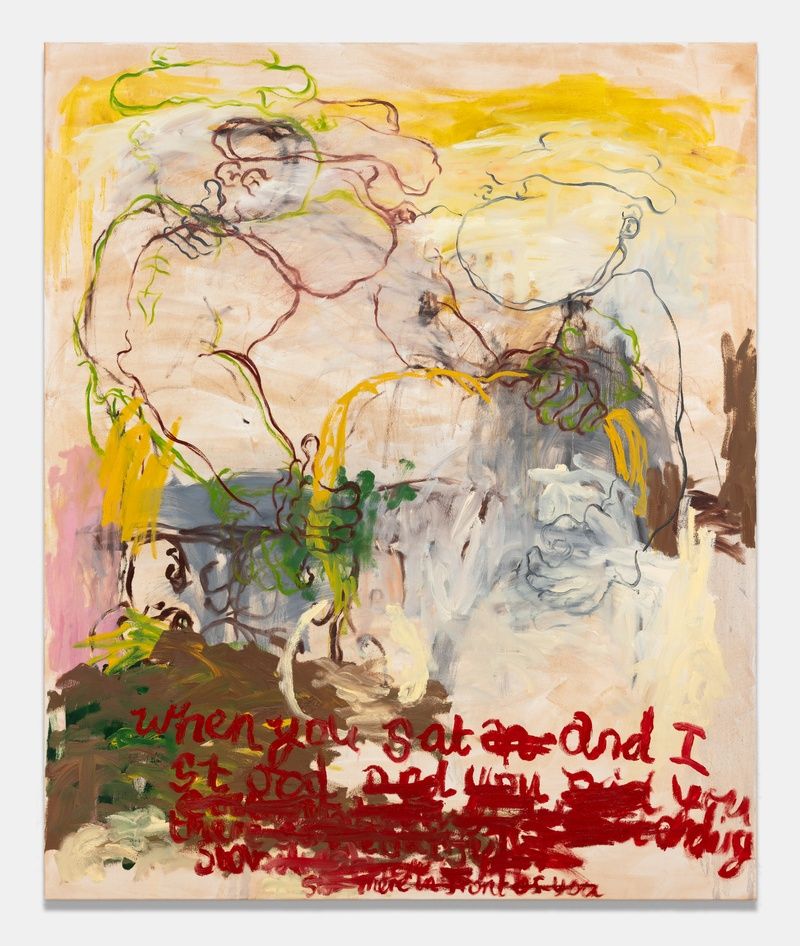
James Fuentes is pleased to present Lola Stong-Brett, Sometime Somewhere Someone Is Dancing, the artist’s first solo exhibition in New York. Born in London and shaped in recent years by life in the seaside town of Margate, in this new body of work Stong-Brett introduces the ocean as both setting and metaphor: at once a physical landscape of rhythm, depth, and horizon, and a reflection of the emotional currents that shape our everyday lives.
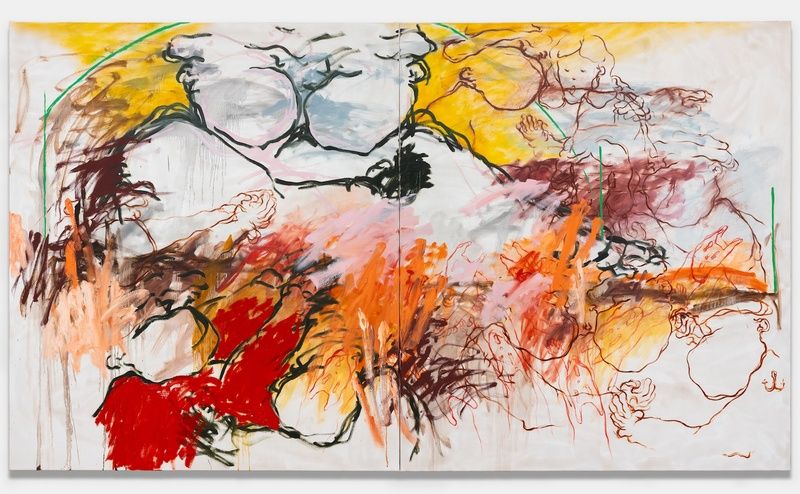
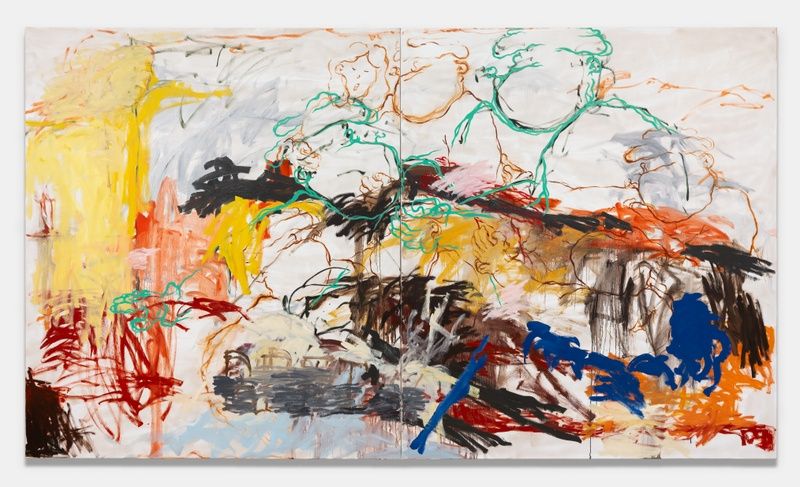
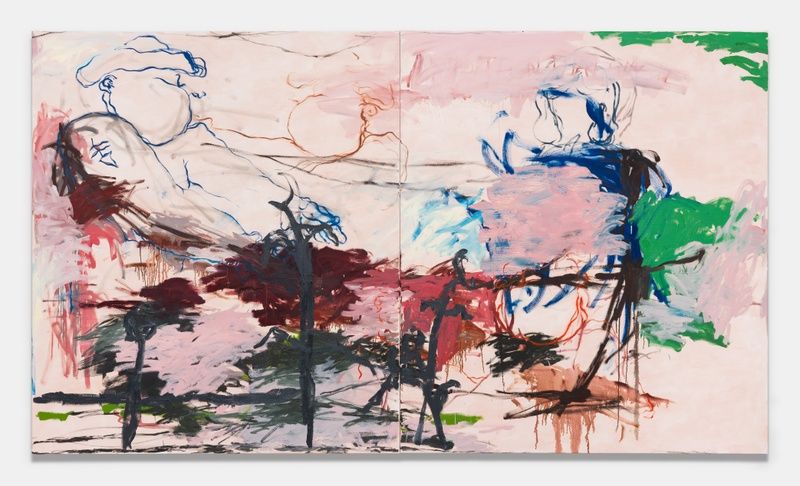
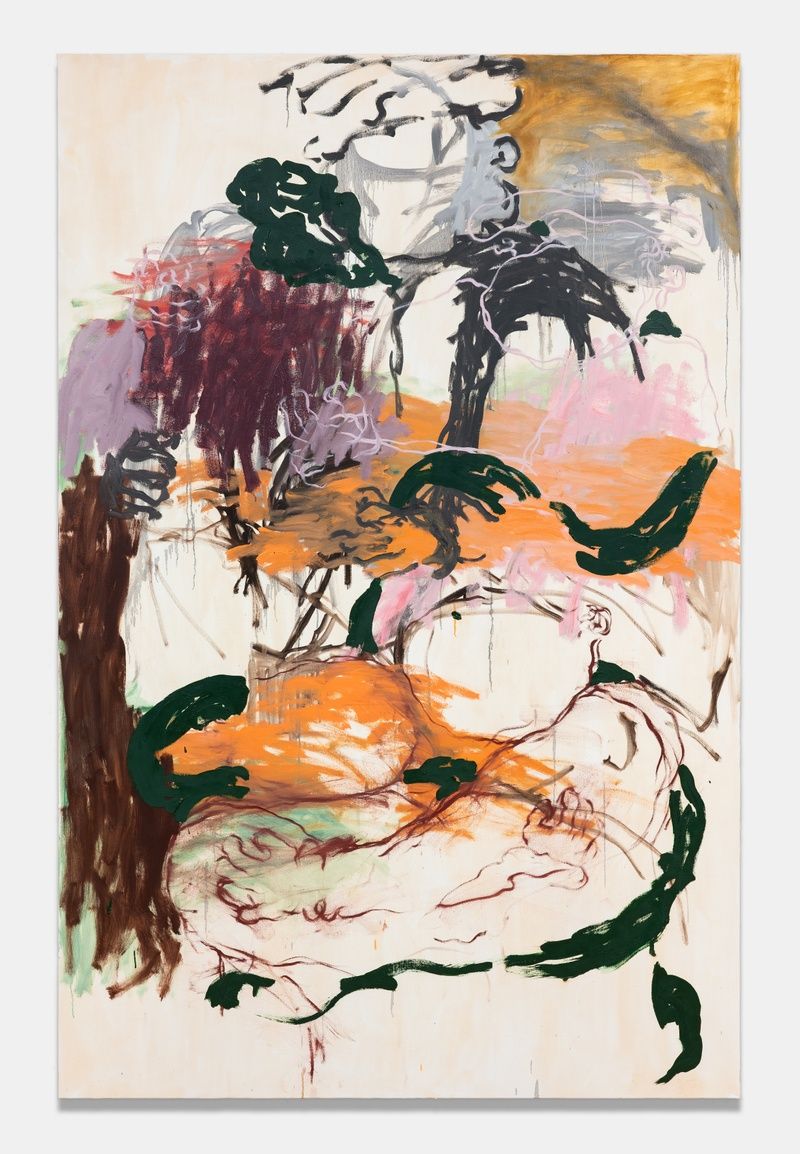
Working at a scale that envelops the body, Stong-Brett’s mark-making is deeply diaristic. Cartoon-like figures emerge from fields of heightened gestural abstraction, recording fluctuating inner states to form an entwined world of direct expression. Across the paintings, figures intertwine, drift apart, cling to one another, or reach beyond each other’s grasp. With great emotional immediacy, the works evoke the complex, shifting choreography of human connection—the experience of holding on and letting go, like witnessing someone you love move beyond you.
James Fuentes is pleased to present Lola Stong-Brett, Sometime Somewhere Someone Is Dancing, the artist’s first solo exhibition in New York. Born in London and shaped in recent years by life in the seaside town of Margate, in this new body of work Stong-Brett introduces the ocean as both setting and metaphor: at once a physical landscape of rhythm, depth, and horizon, and a reflection of the emotional currents that shape our everyday lives.
Working at a scale that envelops the body, Stong-Brett’s mark-making is deeply diaristic. Cartoon-like figures emerge from fields of heightened gestural abstraction, recording fluctuating inner states to form an entwined world of direct expression. Across the paintings, figures intertwine, drift apart, cling to one another, or reach beyond each other’s grasp. With great emotional immediacy, the works evoke the complex, shifting choreography of human connection—the experience of holding on and letting go, like witnessing someone you love move beyond you.
Within this symbolic setting, Popeye returns from earlier works alongside Bimbo and a newly introduced female figure. Part childhood nostalgia, part reference to tattoo culture, Popeye first entered Stong-Brett’s paintings as an emblem of raw humanity. The artist recalls initially being drawn to the character’s visual language before discovering the significance of Max Fleischer’s early animations, in which Popeye emerged as one of the first distinctly working-class cartoon characters, depicted within commonplace settings in sharp contrast to the polished fantasy worlds of early Disney. Over time and through repeated use, however, Popeye’s original allegorical charge has loosened and expanded. Evolving into a more fluid emotional architecture, the figure retains its cultural and personal history while remaining open enough to be inhabited by multiple identities and relationships—at times forming a stand-in for the artist herself and the people closest to her.
Alongside these figures, images of ships and rafts occupy the paintings at shifting registers, oftentimes diminutively scaled against their enlarged cartoon counterparts. Stong-Brett is drawn to these seacraft as hallmarks of endurance, vulnerability, and survival. The most precarious of all, the improvised raft—echoed in form by the rectangular canvas itself—is suspended among the untameable natural forces that define the world around it. Through these capricious icons and abstractions, the works draw us into communal scenes that recall the atmosphere of Bruegel’s paintings, as multiple narratives unfold simultaneously across a single surface.
Like the raft, in Stong-Brett’s earlier works figures clustered around imagined pool tables, beds, or in boxing rings. In all, they operate somewhere between ritual, performance, and everyday life. Within this body of work, flowers begin to substitute for the fences or railings of previous paintings, implying both celebration and mourning, while cruciform shapes subtly thread throughout the compositions. Figures scramble between intimacy and desperation in last looks of love, final gestures of hope, and with bodies reaching upward in search of salvation.
In one work, a dense cluster of red text appears across the bottom half of the painting. Its contents are written in first-person direct address (“you” and “I”) and largely obscured, seemingly caught between revelation and concealment. As with the works’ titles, these fragments of text are drawn from sporadic writings, notes, and poems by the artist. In this way, language enters the paintings intuitively and without premeditation, akin to the artist’s abstract marks. As we grasp to decipher either, intensely personal glimmers of recognition occur, pulling the viewer in with the volatile tides of the work’s origins. In this relational terrain, both artist and viewer remain subject to fate.
Lola Stong-Brett (b. 1996, London, United Kingdom; lives and works in Margate) most recently graduated the Tracey Emin Artist Residency (2024) following studies at the Edinburgh College of Art (2016). Her first solo exhibition, For That, I'll Always Smile, was presented at Carl Freedman Gallery, Margate in 2025. While her work has been included in numerous group exhibitions across the United Kingdom and in Mexico City, Sometime Somewhere Someone Is Dancing marks Stong-Brett’s debut in the United States.