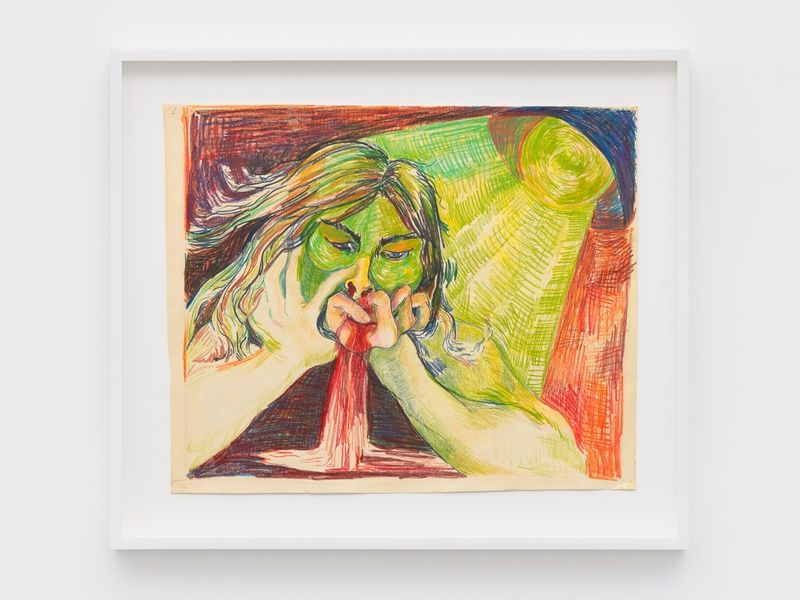
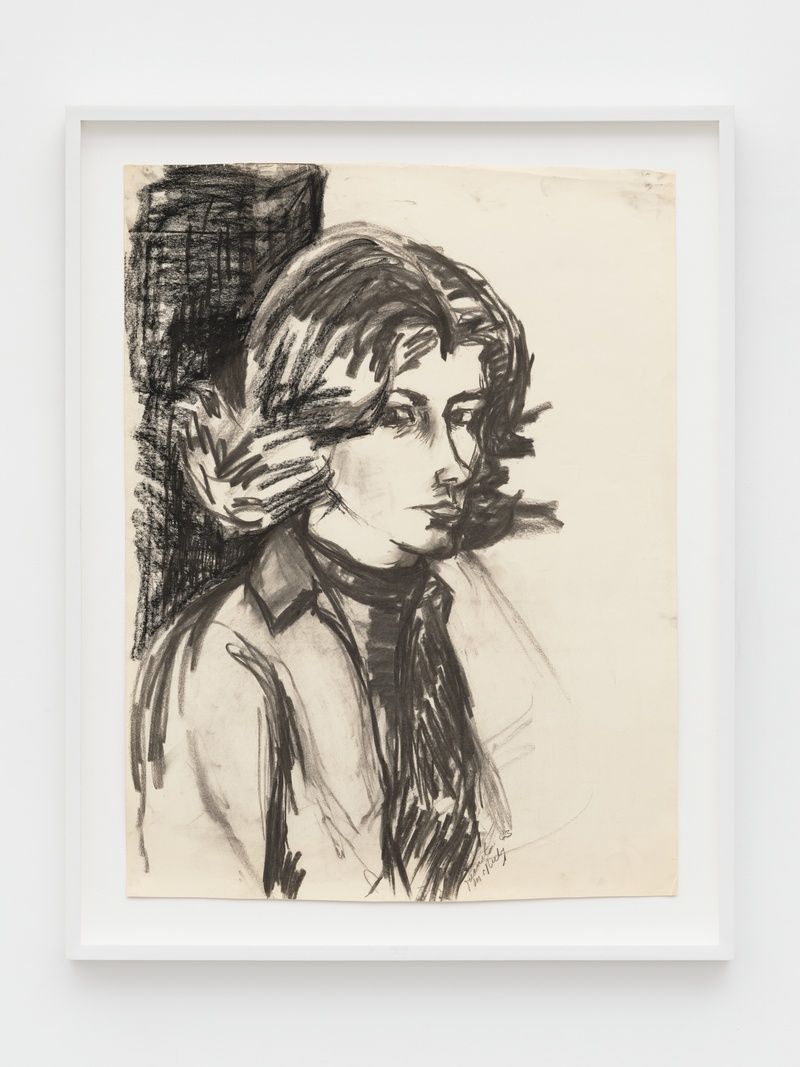
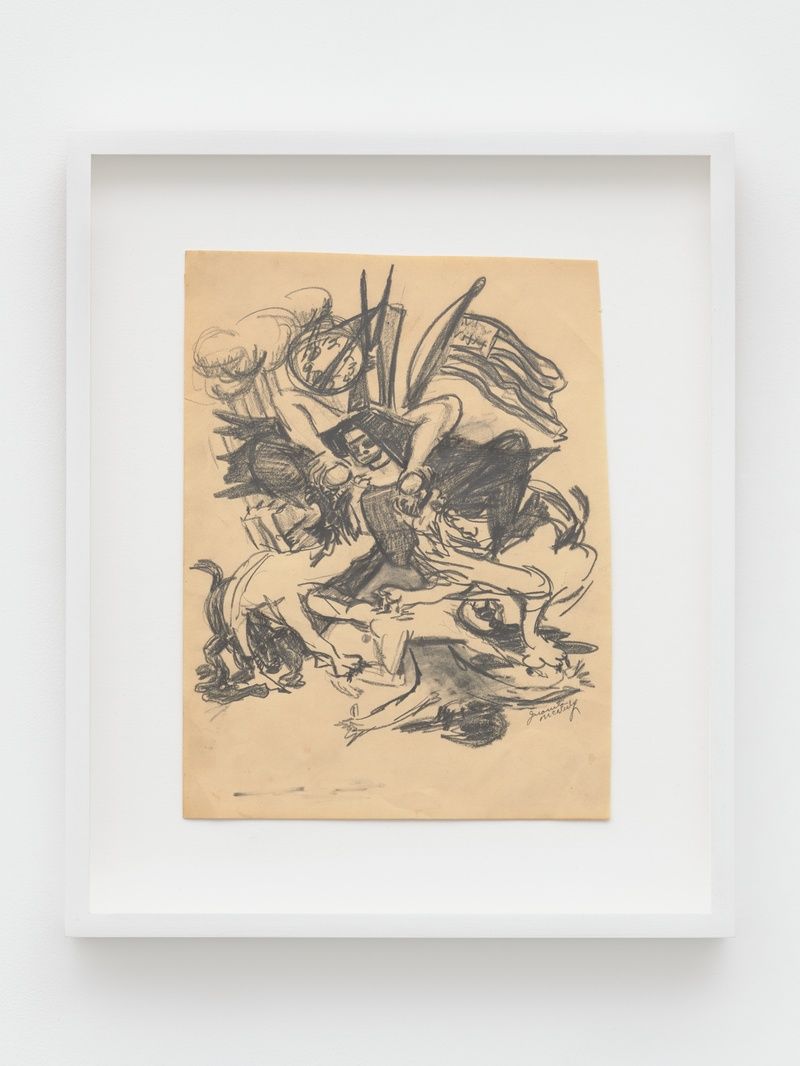
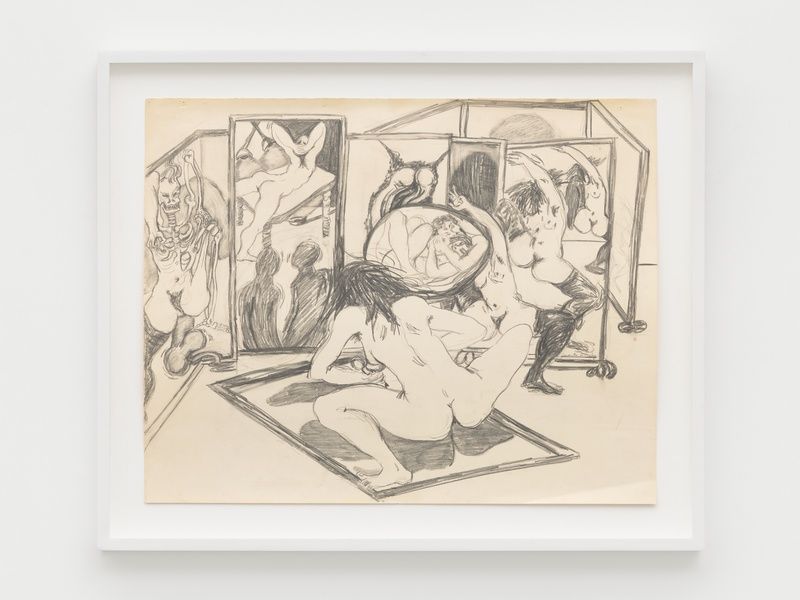
James Fuentes Gallery is pleased to present Juanita McNeely in Los Angeles, an exhibition that explores the lifelong importance of drawing to the art of Juanita McNeely (1936-2023). Bringing together over a dozen works on paper, made with a wide variety of media from graphite and pastel to colored pencil and watercolor, the exhibition considers an inventive and expressive group of drawings and prints in conversation with key paintings from the late 1960s to further reveal the descriptive range and expressive power of McNeely’s work.
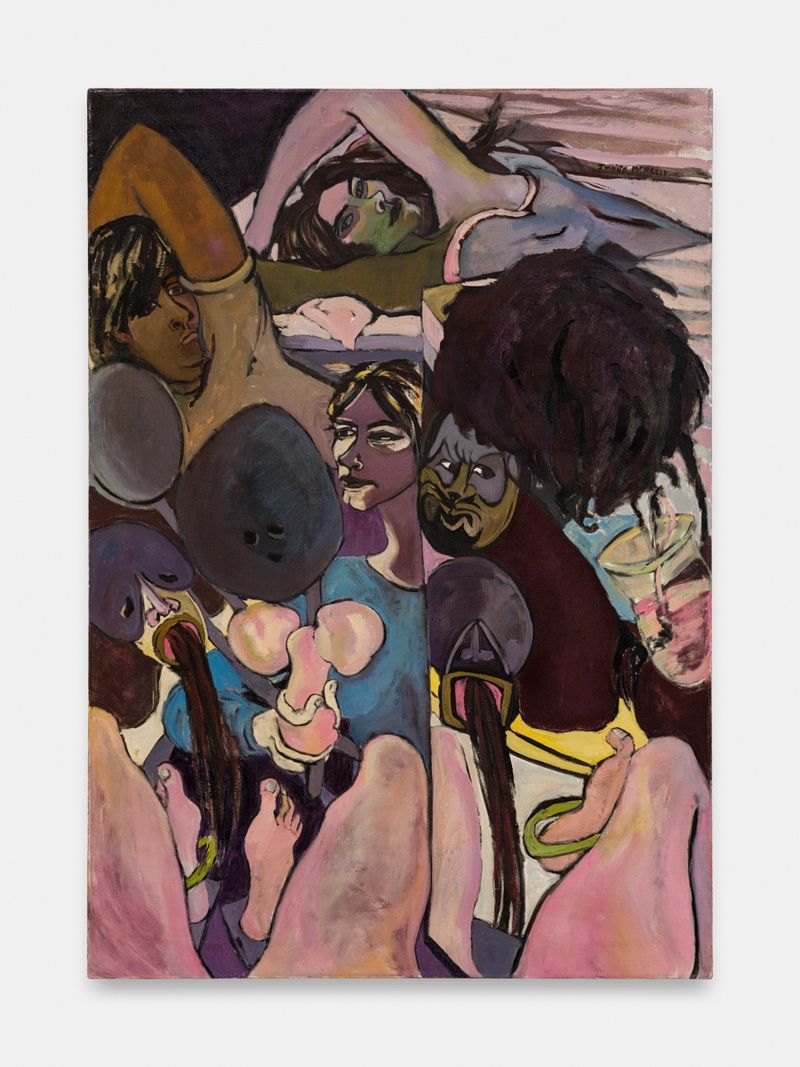
In their palpable psychology and visceral depictions of bodies curved and contorted nearly beyond recognition, McNeely’s paintings embody an understanding of how discomfort, estrangement and uncertainty define so much of our bodily experience. Deeply rooted in her own trials of life-threatening illness, abortion, sexual assault and disability, McNeely’s focal point was the female body, specifically one portrayed as a site where pleasure and pain could converge in unexpected and even transgressive ways. Though painting was her primary way of working through these deeply felt realities—those seen as vision and nightmare all at once—the artist regularly produced works on paper in parallel to the larger works, using the smaller scale of paper to find new directions for her ideas and different expressive registers for her materials.
Including preparatory studies, intimate scenes of the artist with her partner and multimedia experiments employing a variety of printmaking techniques, the exhibition highlights how McNeely’s works on paper both contrast from and compliment the formal language found in her paintings. In key paintings such as The Yellow Womb (1969) and Kick the Bum Out (late 1960s), compositions are defined by the way saturated color is used to both structure and liven space otherwise compressed with limbs and faces. Meanwhile, a large pastel on paper, Untitled (c. 1990s), can stand as an independent work that echoes the twisted and suspended figures found in her paintings while also seeming comparatively sparse, even restrained. The preservation of negative space around bodies seen in states of self-absorption allows them to take on a lightness that is purposefully absent from how they are described on canvas.
Though one can see in many of the paper works the origin of later paintings, McNeely just as often used the mutability of working at a smaller scale to render impressions of objects and people, or to explore emotional and psychological states concentrated into a single form. Forms that would be present in her paintings within complex compositions—those that explored intense or traumatic experiences—are often seen in the paper works shorn of context and cast as solitary forms, their dramatic weight the result of the artist’s palette and markmaking rather than the atmospheric tension of a larger scene. Working with paper and printmaking not only allowed McNeely to readily adapt to the changing circumstances of her life, they also contributed to the startling clarity of the figurative idiom she created, one radical for its time and undeniably so for our own.
Juanita McNeely (1936-2023) was born in St. Louis, Missouri, and lived and worked in New York City. She graduated with an MFA from Southern Illinois University and a BFA from the St. Louis School of Fine Arts at Washington University. Throughout a six-decade career, she remained committed to conveying the extreme physicality and movement of the human figure, informed by her close observation of others as well as her personal experiences of sexism, illness, abortion, and disability. Brazenly defying the conventions of art history, her work approaches the human form as a powerful source of movement, animality, emotion, and rupture. McNeely was a member of the Fight Censorship group founded in 1973 by Anita Steckel, alongside peers including Judith Bernstein, Louise Bourgeois, Martha Edelheit, Joan Semmel, Hannah Wilke and Eunice Golden; as well as Women Artists in Revolution (W.A.R.), Redstockings, and other artist activist groups.
Her work is held in the permanent collections of the the Whitney Museum of American Art, New York; Minneapolis Institute of Art; Rubell Museums, Miami and Washington DC; Palacio de las Bellas Artes, Mexico City; National Museum of History & Art, Taipei; and university special collections including the Women’s Studies Research Center at Brandeis University, the Oakleigh Collection at Skidmore College, the Morris Library at Southern Illinois University, and the William and Uyendale Scott Memorial Women Artists Study Collection at Bryn Mawr College. Most recently, her work has been presented in exhibitions including Juanita McNeely (2026-2027), organized by Counterpublic and on view concurrently at the Contemporary Art Museum St. Louis and the St. Louis Art Museum; For Dear Life: Art, Medicine, and Disability at the Museum of Contemporary Art in San Diego (2024-2025); Is It Real? Yes, It Is! (1969); The Whitney’s Collection: Selections from 1900 to 1965 at the Whitney Museum of American Art (2019-2025); and at the Rubell Museums in Miami (ongoing) and Washington DC (2022-2023).